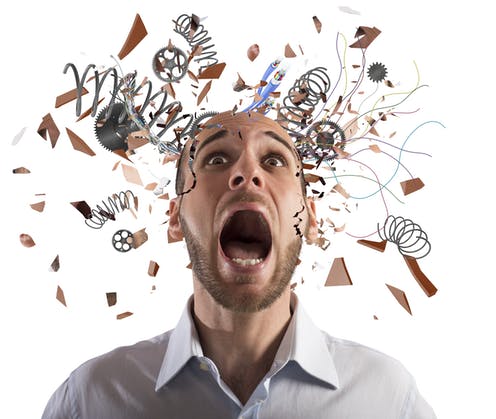
The Christmas holidays are over, and the new year is well underway. All that binge shopping…and partying…and eating…and drinking will take its toll on the body and wallet over the next few weeks (maybe, months!). Then comes the anxiety, worry, and stressing about how to fix all that, compounding the regular day-to-day stress. Unaddressed or improperly addressed stress piles up to tipping point and could rob you of your health and wellbeing, earning it the title “Serial Killer”. To effectively address the issue of stress, we need to identify its characteristics.
Identifying Stress
Stress is the body’s way of rising to a challenge, be it life-threatening, trivial or fun, with the release of the stress hormones, adrenaline or epinephrine (increases the heart rate and blood pressure, getting ready for “fight or flight”) and cortisol (acts to replenish the energy depleted during the response). Now, a little stress is not bad if it gets you to create an action board with realistic strategies towards achieving goals, but when it is a persistent response to physical as well as mental stimuli, your body protests.
Stress is linked to disease. Stress is not a disease, but when the body is chronically stressed, it remains under the influence of the stress hormones, all other systems are compromised and this results in faulty immune, reproductive, and growth systems, and a brain chemistry similar to clinical depression. Stress can also lead to poor eating habits, alcohol consumption, smoking, and lack of exercise – all of which are risk factors for hypertension and poor indicators of good health and longevity.
Stressed is brought about by social and psychological conditions invented by society. The documentary film Stress: Portrait of a Serial Killer discussed this concept. Now is this relatable or what? The Christmas holiday season has become so commercialized, mounting undue pressure for gift-giving to all and sundry, hosting parties of different sizes, trying to look the absolute best at all parties, and a plethora of other expectations. On the other hand, there are those who feel so much anxiety and stress because they do not have friends and family to share this season with, according to the expectations of the society. Then, back to work in the new year, employees are faced with additional stress of targets and deadlines, as well as conflicts with bosses and co-workers.
Lack of control and predictability are salient factors that predispose to stress. Someone may be having a bad day and take it out on another person, giving rise to a situation where the victim has no control over the event, and this causes stress. Professor Sir Michael Marmot, Physician and Professor of Epidemiology, observed in his study of over 25,000 civil servants in the United Kingdom that high levels of stress were present in lower cadre employees who did not have control over their work environment.
There is a link between stress and hierarchy. Dr. Sapolsky, a Neuroendocrinologist at Stanford University, observed the similarity in socio-political construct between the baboon population and the human world. He noted that there was a need for one to be politically savvy in order to survive. The most cunning and aggressive males dominated the pack, and his analysis of the hormonal levels in their blood samples showed that the dominant males had lower levels of stress hormones than the submissive males. A similar picture was obtained in a 2015 study on Gender Roles and Traits in Stress and Health, where females were observed to have marked disadvantage with regard to stress and morbidity due to their low socio-economic status in the society.
When you are under stress, your body gives you signals. These signals maybe physical (raised blood pressure and heart rate, sweaty palms), emotional (irritability, anger, apathy), cognitive or perceptive (poor memory, learning difficulties, decreased creativity), and/or behavioral (aggression, eating disorder, drinking) changes. Don’t ignore them!
Slaying the Serial Killer
Now that we have a good idea of what stress looks like, let us look at steps to tackle this killer phenomenon for good – measures that will help to eliminate bad stress and promote health and longevity.
Identify your stressors and modify your emotional and physiologic responses to them. Be intentional in choosing to stay calm and constructive, instead of throwing up your hands in despair and stressing out. Control what you can and leave behind what you cannot control. Adopt the problem-focused (such as active coping, planful problem-solving) and not the emotion-focused (avoidance, disengagement) coping skills.
Employ effective time-management skills. Ask for help when appropriate, pace yourself and set priorities, realistic goals and expectations. It’s OK, and healthy, to realize you cannot be 100% successful at everything all at once.
Frequent “meeting of minds”. Being able to meet with a group of friends or family to just relax and defuse offers numerous benefits including listening ears, putting things in perspective, and helping hands. It also gives the opportunity to offer compassion and care for others, which have been shown to relieve the stress on the giver (how about that?!).
Humor and laughter can relieve stress in several ways. Laughter relaxes the muscles and relieves physical tension. It stimulates the release of endorphins (feel-good hormone and natural pain killer) and decreases stress hormones. Looking at the funny side of issues can help to put them in perspective and find other solutions to them.
Take time out for yourself with relaxing activities – a short “Power” nap during the day (improves productivity), regular spa treatments, and meditation. Encourage and compliment yourself – “Sell yourself to yourself”. When you are feeling overwhelmed, remind yourself of what you do well. Have a healthy sense of self-esteem.
Exercise is an overall winner. Besides building strength and stamina, it stimulates the production of endorphins and reduces the stress hormones. It can also provide distraction from worries and allows you to think clearly (Just try a 20-minute walk!).
Do not accept substitutes for stress reduction. Alcohol, Caffeine, Nicotine, and Barbiturates/tranquilizers offer only temporary stress relief, may lead to addiction, and make it difficult to focus and plan strategically with a clear mind.
Assert yourself. You do not have to meet others’ expectations or demands to your detriment. It’s OK to say “no”. Create a healthy and productive environment for yourself, with more say in what happens at home and work, and more reward for your efforts.
If all else fails, SEEK HELP from your family Doctor or other professionals, such as social workers, psychiatrist, psychologists, and the occupational health department. Asking for help is not a sign of weakness or self-indulgence…It is the wise thing to do.
Here’s wishing a healthy, happy and fulfilling 2019! Live your best life!!!