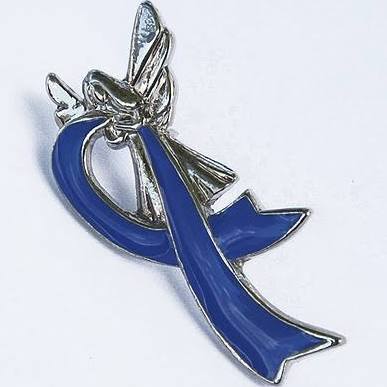
On Saturday, March 11, 2017, I participated in a 5k walkathon hosted by the David Omenukor Foundation as part of the activities to mark the Colorectal Cancer awareness month. It was educational and fun-packed, with health talks, free health screening, refreshments, and an overflow of goodwill.
The questions asked by the participants during the health talk revealed that most people are not well informed about this manageable and preventable, but fatal disease. As though to confirm this, two days later, I watched two videos via social media, which boldly declared that “The word called cancer is nothing more than a lie!”
I was dumbfounded! Really, people?! In 2017?! Come on!!!
It’s one thing to have limited information about certain disease entities, but to declare them non-existent is to live in total denial (not to mention misleading others!).
So, if you watched either of those videos, kindly disregard the misleading statement.
Here are 5 things you need to know about colorectal cancer.
- Colorectal cancer affects the colon and rectum (the most distal part of the large intestine leading to the anal canal). World Health Organization (WHO) reports that it is the 3rd most common cause of cancer deaths, accounting for 774,000 deaths in 2015. It is more common in developed countries, but the patients in the developing countries present at advanced stages of the disease, and are more likely to die from the it.
- Risk factors: It affects both men and women. It was associated with increasing age (50 years and above) in the past, but recent studies show that younger people are now more frequently being diagnosed with the disease. Probably due to a combination of family history, poor diet and sedentary lifestyles. Another risk factor is a history of inflammatory bowel diseases, such as Crohn’s disease.
- The signs and symptoms: The unfortunate thing about colorectal cancer is that it has no perceptible symptoms at the early stage. By the time the symptoms, such as blood in the stool, persistent abdominal pain, and unexplained weight loss occur, the disease is already progressed.
- Colorectal cancer is preventable by:
- Screening: Since most colorectal cancers begin as longstanding abnormal growths called precancerous polyps, regular screening (flexible sigmoidoscopy or colonoscopy) is encouraged from the age of 50 years to detect these polyps and early stage cancers. People with positive family history of the disease are advised to get screened earlier than that. Please consult your physician to determine this.
- Physical activity: At least 2 hours and 30 minutes of moderate-intensity physical activity (such as brisk walking) every week, in addition to muscle strengthening activities on 2 or more days of the week.
- Maintaining a healthy weight: Try to maintain a Body Mass Index (BMI) of 18.5 to 25.
- Moderate alcohol intake: Per theDietary Guidelines for Americans, moderate alcohol consumption is defined as having up to 1 drink per day (approximately 15cl of wine or 5cl [1 shot] of liquor or 35cl of beer) for women and up to 2 drinks per day for men. According to the Center for Disease Control (CDC), this definition is referring to the amount consumed on any single day and is not intended as an average over several days. However, the Dietary Guidelines do not recommend that individuals who do not drink alcohol start drinking for any reason.
- Avoiding smoking: There is no risk-free dosage of first- or second-hand smoke.
- Dietary modification: Although the studies are inconclusive, a diet low in animal fats and high in fruits, vegetables, and whole grains may reduce the risk of colorectal cancer.
- Colorectal cancer be treated: Fortunately, colorectal cancer has high cure rates when it is detected early and patients are treated per best practices.
Now you know the basics about colorectal cancer, be ambassadors of good health and share the information with everyone that you know.
Photo credit: http://www.beseengetscreened.com